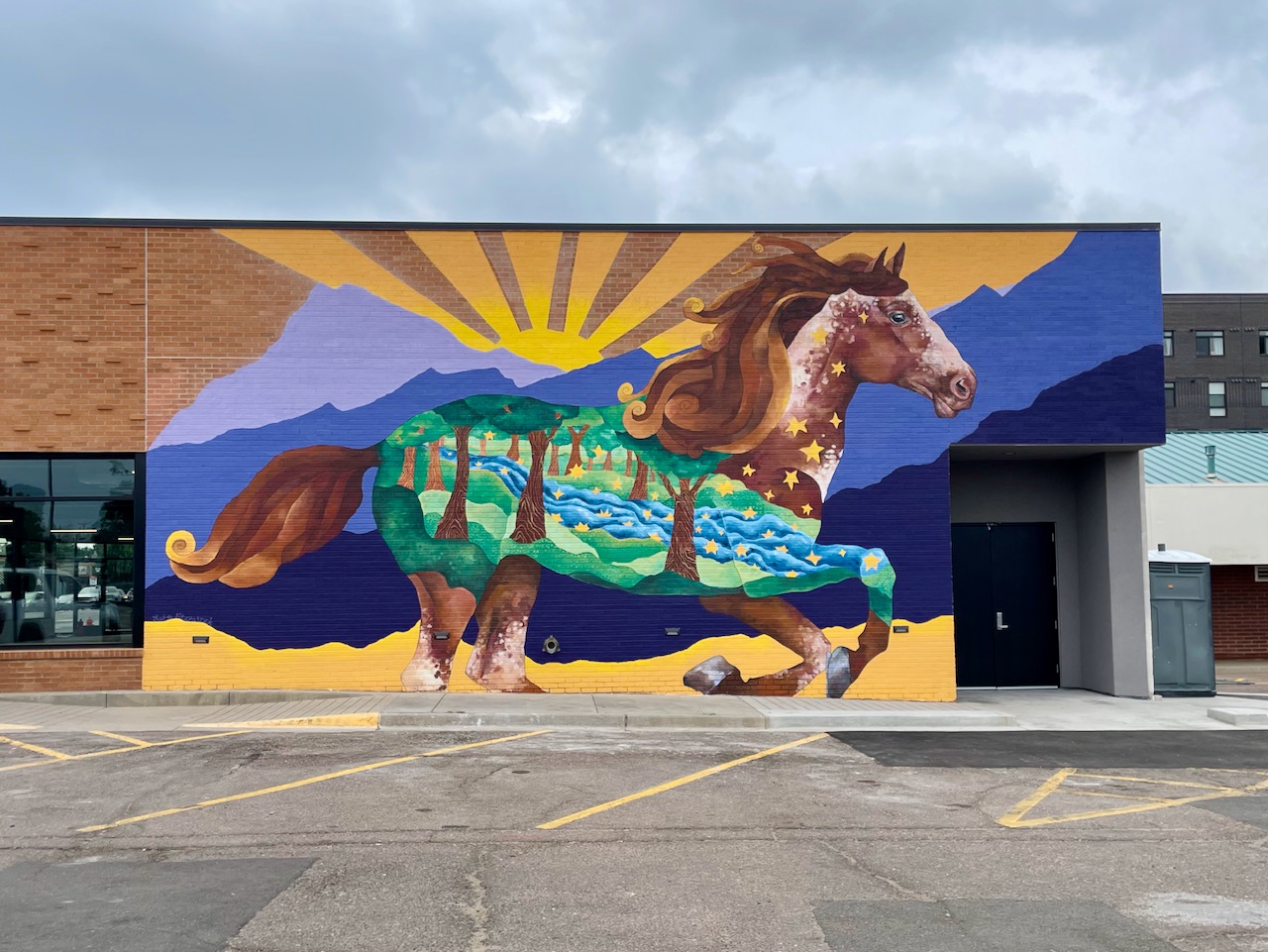

Explore Kate Fitzpatrick's Mural Process
About Kate
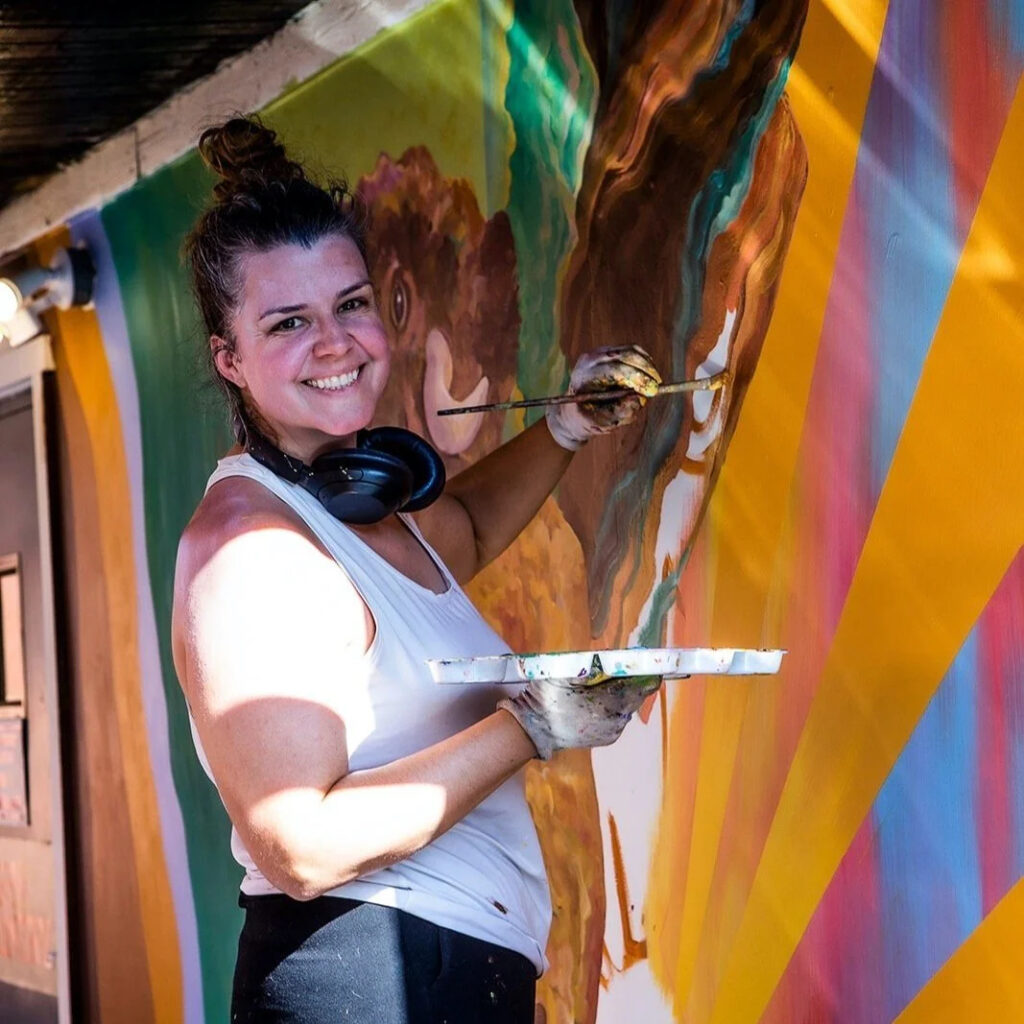
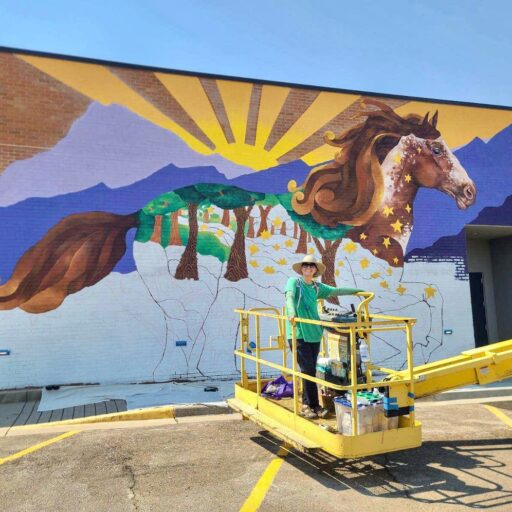
Kate Fitzpatrick is a Colorado-based visual artist and muralist whose work celebrates wildlife with both beauty and integrity. A lifelong animal lover, she uses vegan art materials, sources reference photos from wildlife photographers, and avoids imagery that places animals beneath humans. She also partners with sanctuaries, creating art that supports animal welfare and advocacy.
Since 2023, Fitzpatrick has been commissioned to paint large-scale murals across Colorado and has contributed to festivals including the Fort Collins Mural Project, Streetwise Arts Mural Festival, and Fraser Mountain Mural Festival. Her passion for murals and her identity as a coda (child of Deaf adults) inspired her to found the KissFist Mural Fest — a nonprofit festival dedicated to celebrating Deaf culture, paying artists a fair wage, and creating an accessible, family-friendly space.
Step One
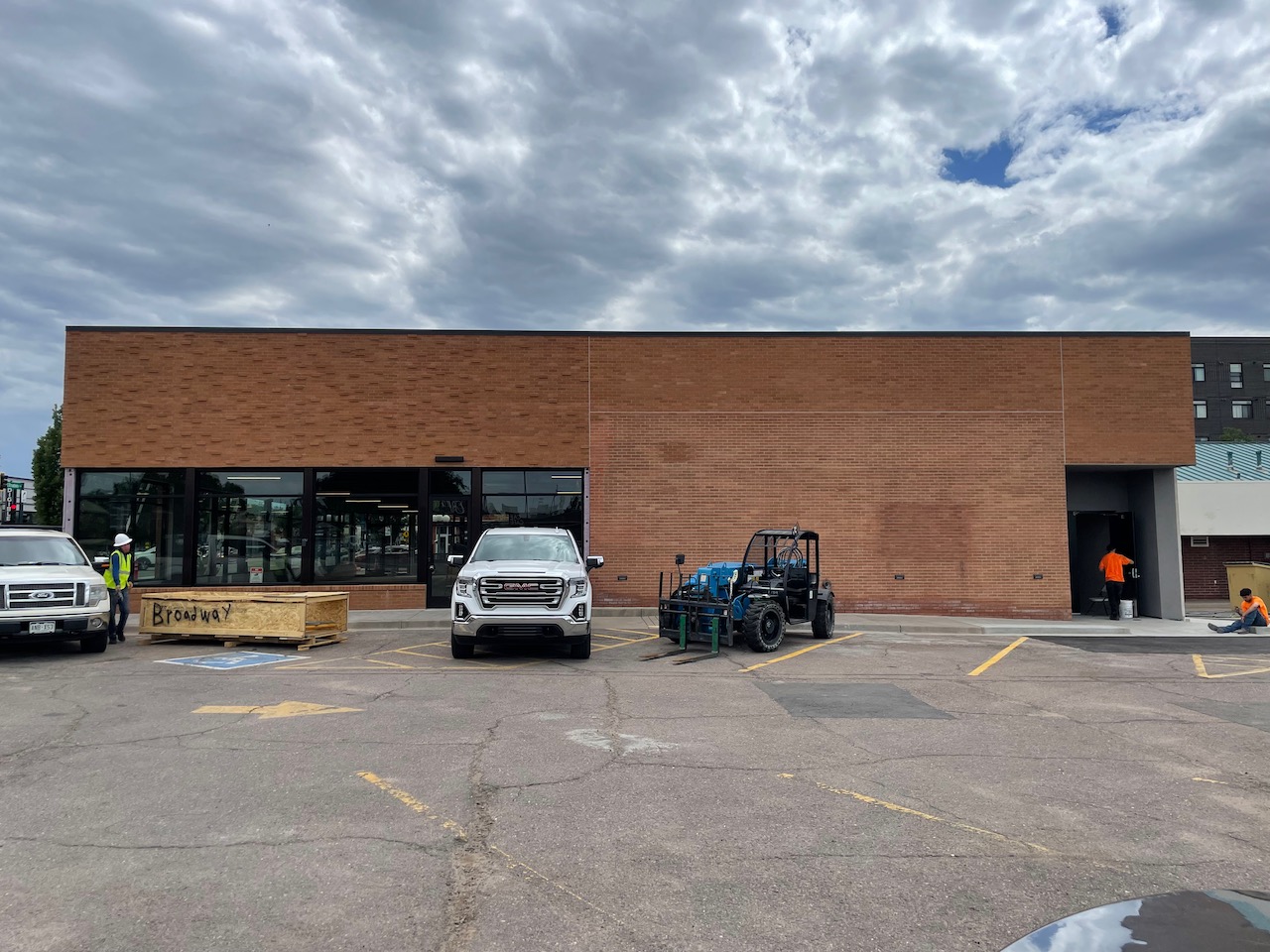
Once a mural design is approved by all parties involved (this can include the building
owner, an art agency, the company commissioning the mural, and the artist), I visit the
mural site. Seeing the wall first helps me determine a few things: do I need to prime the
surface first? Is the wall north or south facing – this is important to know because it
means will I be in the hot sun all day or not? I like to start early when painting a mural,
and aim to get to the site around 5am to avoid the hottest part of the day. Are there
bathrooms nearby? Is there parking? These are some of the logistical things that I need
to know before painting.
Step Two
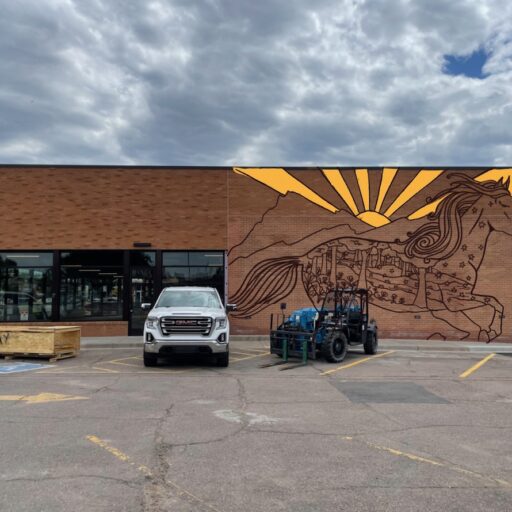
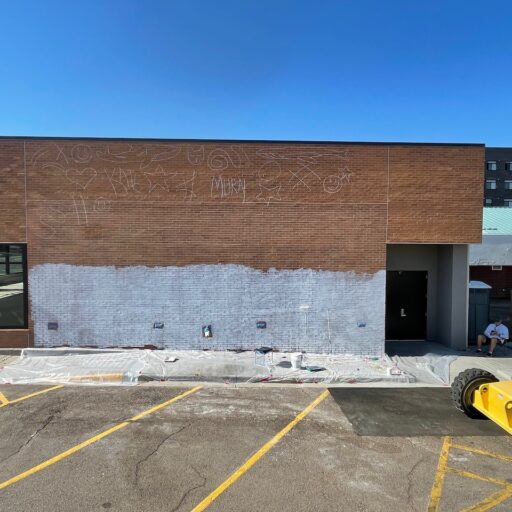
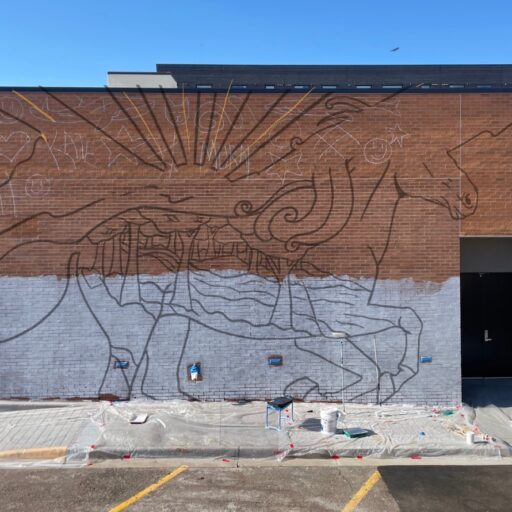
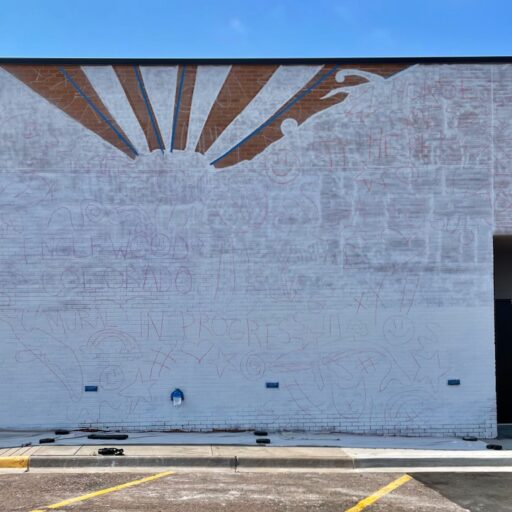
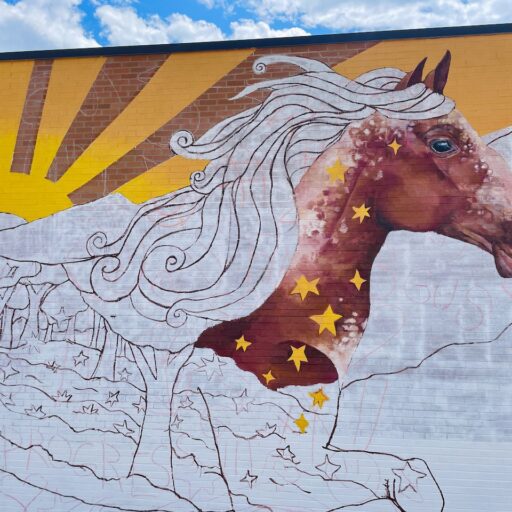
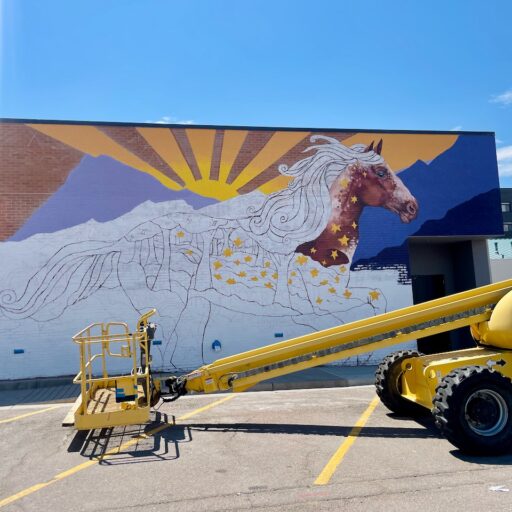
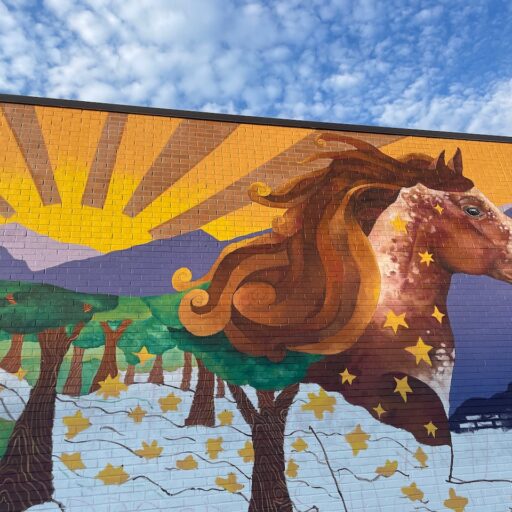
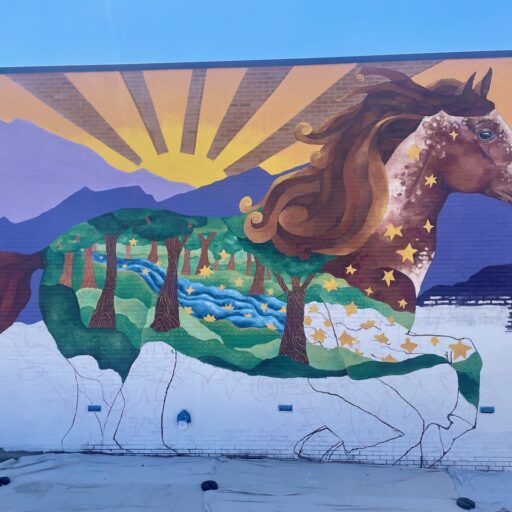
Then, I pack up my car with everything I need – paint, tools, water, sunblock, food, drop cloths, ladder, and more. If I need to prime the wall, I do that. Then I create my doodle grid and get the design outlined onto the wall.
A doodle grid is a really fun and effective method for scaling a design from a small digital sketch to a large wall.
I typically draw my mural concept as a digital outline. I use an iPad drawing app called
Procreate.
Then, at the mural site, I use paint or chalk in a light or medium color like pink or white (depends on the color of the wall surface) and I just doodle all over the wall. Every artists approaches this differently. Some use spray paint and do letters and numbers. I love doodling so I draw a lot of whales, flowers, squiggles – whatever comes to mind. I love writing my nephew’s names as well so that they are a part of the mural.
After I’ve doodled all over the wall, I take a photo of it. Then I put the photo into procreate and layer my digital sketch over it. I drop the opacity of the digital sketch down so that I can see both my digital sketch and the doodle grid.
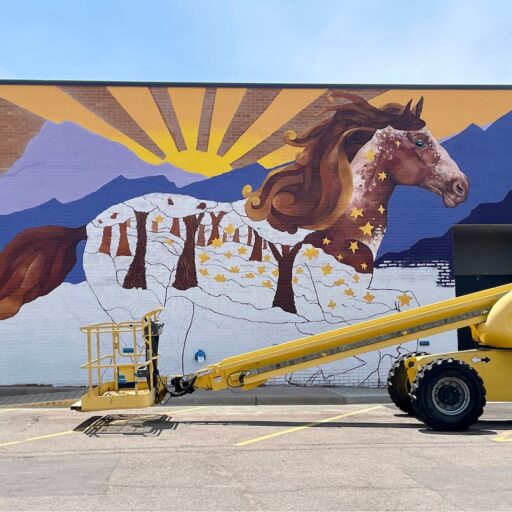
Then I go back to the wall with a dark brown or Sienna paint and I use that image of my digital sketch overlaid on the doodles as my guide to place the outline.
Step Three
Step Four